Bristol: the history of the cricket ground
Researched 17 October 2026 · Club archives and primary sources
Gloucestershire first played at the Nevil Road ground in 1889, beginning the long association between county cricket and this part of Bristol. The modern Seat Unique Stadium combines that heritage with a rebuilt pavilion, permanent floodlights and a record of memorable international matches. [1] [3] [10]
History at a glance
A timeline of Bristol
- 1889Gloucestershire play Lancashire in the first Nevil Road fixture. [1]
- 1983New Zealand face Sri Lanka in Bristol’s first World Cup match. [2]
- 2013The new Bristol Pavilion opens. [3]
- 2016Permanent floodlights enter use. [5]
- 2017The Museum and Learning Centre opens. [6]
- 2017England beat South Africa in the Women’s World Cup semi-final. [8]
- 2022The venue becomes the Seat Unique Stadium. [10]
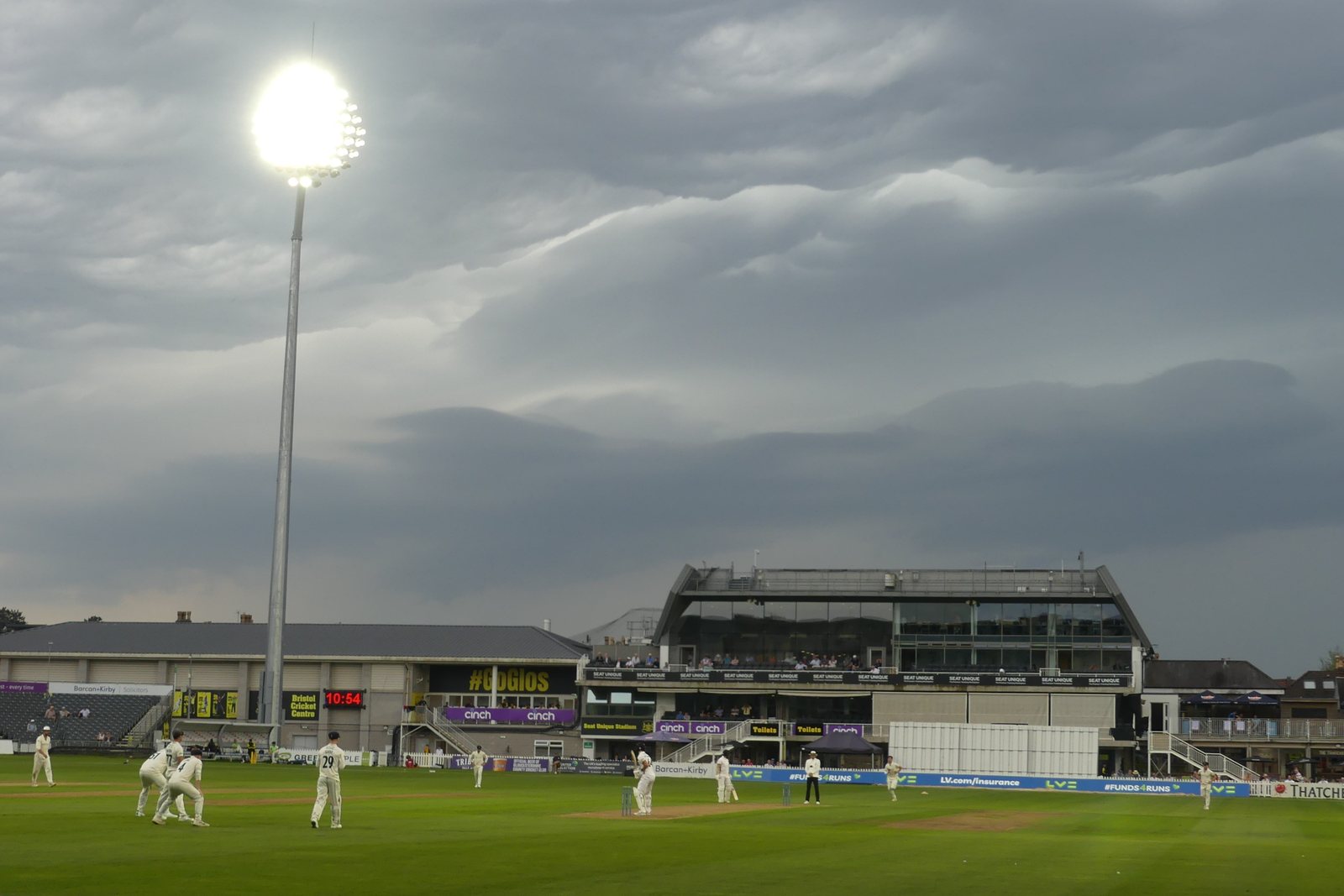

Finding a county home at Ashley Down
The search for a Bristol base did not begin with the present ground. Gloucestershire’s Heritage Trust describes a proposal by Henry Mills Grace in 1884 to lease land at Eastville. That plan was dropped in 1887. Negotiations then began for land at Ashley Down, leading to the ground that became the county’s home. The first fixture at Nevil Road was against Lancashire on 1 July 1889. [1]
The sequence places the ground within the Grace family’s broader involvement in Gloucestershire cricket. It also distinguishes the age of the county club from the age of its present headquarters. Bristol had cricket before this ground opened; the move created a lasting home around which later generations of supporters could gather. Walking in from Nevil Road today, the continuity is in the location and the club, while much of the surrounding accommodation belongs to more recent building projects. [1]
A county ground on the international circuit
The County Ground hosted its first international during the 1983 World Cup, when New Zealand played Sri Lanka. Further World Cup fixtures followed in 1999. Those matches placed a compact county venue before a wider audience, while Gloucestershire’s own programme remained the reason for its regular use. The Cricketer’s history of the ground also records England’s first home international against Ireland here in May 2017, won by seven wickets with Adil Rashid taking five for 27. [2]
The distinction between county home and international stage is especially easy to appreciate in Bristol. A familiar neighbourhood ground can feel very different when temporary arrangements, a full crowd and a major televised match change the scale of the occasion. Yet the international matches become part of the same local memory as Gloucestershire’s fixtures. The history of the venue therefore includes visiting national sides and their supporters without losing its connection with the county’s season-long cricket. [2]
A new pavilion and a changed boundary
The redevelopment of 2013 added residential accommodation, conference and event space alongside the cricket facilities. The new Bristol Pavilion opened in August that year, with media and hospitality provision and a view from behind the bowler’s arm. Its design and purpose help explain the ground’s modern appearance: the redevelopment was concerned with the club’s use of the site throughout the year as well as the experience of watching a match. [3]
There was also an unusual public-art element during construction. Artist Tom Dale produced the temporary Bison–Trumpet work for the hoardings, using colours drawn from the site and matching them to commercially named paints. Bristol’s public-art programme records the commission alongside the wider building project. The hoardings were temporary, but the story shows how redevelopment touched the streets and surrounding neighbourhood, not only the spectators on the inside of the boundary. [3]
The arrival of permanent floodlights
The club’s planning consultants, Alder King, recorded unanimous council approval for permanent floodlights, with installation intended ahead of the 2016 season. Their account connected the decision with retaining international cricket and preparing for the World Cup. The towers became a significant change to the local skyline as well as a practical addition for the sport, allowing the ground to support the demands of evening and televised fixtures. [4]
Bristol24/7 reported their first use on 20 May 2016, when Sussex visited for the opening night of the T20 Blast season. Sussex made 242 for five, an emphatic batting display to mark the new setting. The ground was then carrying the Brightside name, which appears in contemporary reports of the occasion. On a present-day visit the lights are so familiar that it can be difficult to imagine the venue without them; this match provides a clear point in their history. [5]
A World Cup semi-final decided at the last
England’s Women’s World Cup semi-final against South Africa on 18 July 2017 supplied one of Bristol’s most dramatic international finishes. South Africa made 218 for six, and England’s chase became much tighter than it had initially appeared. By the closing over, a place in the final depended on the lower order completing the job. Anya Shrubsole struck the winning boundary with two balls remaining, giving England victory by two wickets. [8]
The moment belongs firmly to Bristol, even though England’s eventual World Cup triumph came at Lord’s. It is a useful distinction when remembering the tournament: the semi-final here was the tense passage that made the final possible. The women’s competition also broadened the ground’s international story beyond the men’s one-day matches that had brought earlier World Cups to Nevil Road. For a visitor, this is a field associated with decisive performances in both sides of the international game. [8]
Bairstow’s century in a demanding chase
On 14 May 2019, England and Pakistan produced another memorable Bristol one-day international. Pakistan scored 358 for nine, with Imam-ul-Haq making 151. England chased the target to win by six wickets, led by Jonny Bairstow’s 128 and Jason Roy’s 76. The Pakistan Cricket Board’s scorecard records Bairstow as player of the match, providing a clear statistical account of a day dominated by batting. [9]
The contrast with the close World Cup semi-final is striking. Here a very large target was overcome with four wickets down, illustrating the speed and confidence of England’s one-day batting at that time. For someone reading the ground’s history from a seat in the pavilion, the scorecard gives scale to what happened on the field: the visitors’ substantial innings was answered by an even more effective pursuit. Bristol’s international reputation includes these high-scoring encounters alongside games decided by a narrow margin. [9]
Finding the older game in the museum
The Museum and Learning Centre opened in 2017, with former Gloucestershire captain Mark Alleyne performing the formal opening on 21 April. The Heritage Trust locates it in the Grace apartment block, reached through the Legends Bar. Its displays include the Grace family, England Test players, overseas cricketers, historic equipment and the county’s one-day successes. The museum is therefore a useful counterpoint to the modern buildings around it, preserving older stories within the redeveloped ground. [6]
Among the collection are bats and a chair associated with W. G. Grace, together with medals and memorabilia from Gloucestershire achievements. Objects make the long history more tangible than a list of seasons alone: a piece of equipment can show the scale and materials of an earlier game, while a cup or medal connects a team’s achievement with the people who played. Check the Heritage Trust’s current opening arrangements if a museum visit is part of your plans. [7] [6]
Nevil Road and the Seat Unique Stadium
The stadium naming agreement with Seat Unique was announced in 2022, adding a new commercial name to the long-established Bristol County Ground and Nevil Road descriptions. The partner’s announcement identified new branding on the pavilion and at entrances. A further four-year extension was later announced, continuing the association. These changes belong to the same site: old programmes and match reports can use different names without referring to a different Bristol venue. [10] [11]
On arrival, the most useful features to notice are the Bristol Pavilion, the floodlight towers and the museum entrance in the Grace apartments. They tell different parts of the story: the international and commercial redevelopment, the move towards evening cricket, and the preservation of the county’s past. Together they give the ground a character that goes beyond any one sponsor or famous match. Gloucestershire’s long occupation is still the thread joining the Victorian beginnings to the modern stadium. [3] [4] [6]
What to look for on your visit
- Bristol Pavilion. The pavilion belongs to the redevelopment completed in 2013. [3]
- Floodlight towers. The permanent lights entered use in 2016. [5]
- Museum and Learning Centre. Find county cricket’s past in the Grace apartment block. [6]
For today’s stands, ticket routes, travel and accessibility, use the Bristol visitor guide and accessibility guide.
Sources and further reading
Sources for Bristol connect the dates, performances and changes described here to club archives and published historical accounts.
- Gloucestershire County Cricket Club Heritage Trust: ground origins
- The Cricketer: Bristol ground history
- Bristol public art programme: the ground redevelopment
- Alder King: permanent floodlight planning approval
- Bristol24/7: the first game under the new lights
- GCCC Heritage Trust: Museum and Learning Centre
- GCCC Heritage Trust: heritage objects
- ICC: England’s Bristol World Cup semi-final victory
- Pakistan Cricket Board: Bristol ODI scorecard, 14 May 2019
- Seat Unique: the Bristol naming partnership
- Seat Unique: partnership extension
Explore the other grounds
- Lord’s history
- The Oval history
- Edgbaston history
- Old Trafford history
- Headingley history
- Trent Bridge history
- Taunton history
- Hove history
- Canterbury history
- Chelmsford history
- New Road history
- Derby history
- Grace Road history
- Wantage Road history
- Southampton history
- Sophia Gardens history
- Chester-le-Street history