Wantage Road: the history of the cricket ground
Researched 17 October 2026 · Club archives and primary sources
Wantage Road has been Northamptonshire’s cricket home since 1886, but for much of its life the site also belonged to the town’s football story. Its pavilions and named rooms preserve memories of county players and benefactors, while recent rebuilding has changed the facilities behind the scenes. The ground is a useful place to follow both the sporting and practical history of a county club.
History at a glance
A timeline of Wantage Road
- 1886Northamptonshire play Surrey Club and Ground at the new venue on 15 May. [1]
- 1905Northamptonshire enter first-class cricket. [1]
- 1976The county wins its first major limited-overs trophy. [4]
- 1994Northampton Town leave the shared ground. [3]
- 2013 and 2016The Steelbacks win the domestic T20 title. [5]
- 2021The Wantage Road End is renamed for David Capel. [6]
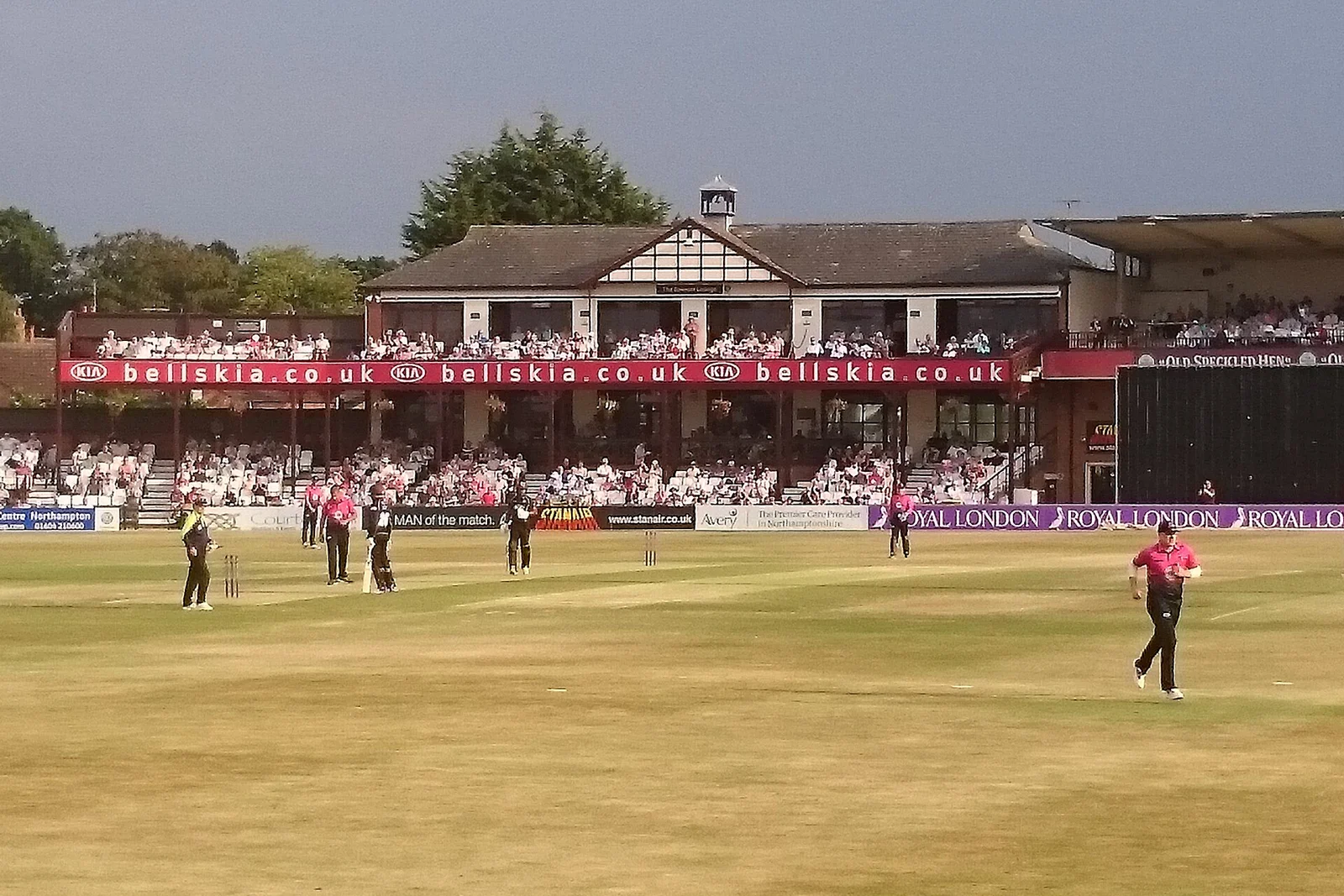

From the Racecourse to Wantage Road
Northamptonshire’s county club was reorganised at the George Hotel in 1878, following concern about the lack of a properly representative county organisation. Cricket had previously been played on the town’s Racecourse, but enclosing a public space for major matches caused difficulties. The search for a private ground led to land in Abington, prepared by Alfred Cockerill. Northamptonshire first played there on 15 May 1886 against Surrey Club and Ground. First-class status followed in 1905. [1]
Those dates describe three separate stages: organising a county club, establishing its home and joining the senior competition. Wantage Road gave the organisation a place it could develop around the needs of cricket. The later purchase of the freehold in 2012 was another important step in that relationship with the land. The same club history connects a new pavilion with the centenary fundraising of 1978, illustrating how anniversaries could support practical investment. [1]
When the Cobblers shared the site
Northampton Town Football Club played at the County Ground from 1897 until 1994, a period documented by Historic England’s photographic archive. Its photographs show the football terraces and spectators within a sporting landscape very different from the cricket-only view a visitor encounters today. Remembering that second use helps explain why old images of the ground can seem unfamiliar even when the location is recognisable. [2]
The cricket club’s account of Northampton Town’s anniversary describes the influence of F. Darnell, who also served as its honorary secretary. It recalls the two sports borrowing facilities in unusual circumstances, including the use of cricket dressing rooms after a football-stand fire in 1929. The ground-sharing story involved everyday improvisation as well as the use of neighbouring pitches. A building intended for one sport might suddenly become essential to the other. [3]
Trophy-winning captains in the room names
The Mushtaq Mohammad Suite and Jim Watts Suite in the Lynn Wilson Centre honour captains who led Northamptonshire to major one-day trophies. The club’s naming announcement links Mushtaq with the Gillette Cup victory in 1976 and Watts with the Benson & Hedges Cup in 1980. These room names make sporting achievements part of the ground’s ordinary geography, encountered when supporters attend hospitality or other events. [4]
The first trophy had particular significance after a long wait for a major honour. Naming facilities after the captains preserves that story without requiring a monument on the outfield. When you see a player’s name attached to a room or stand, it is worth asking which part of the county’s history it recalls. At Wantage Road, some of the answers concern the development of limited-overs cricket and a team finding ways to win beyond the County Championship. [4]
One-day success and the Steelbacks
Northamptonshire’s official honours list includes the Gillette Cup in 1976, the Benson & Hedges Cup in 1980 and the NatWest Trophy in 1992. The T20 titles of 2013 and 2016 form a later chapter. Together they describe a county whose major successes have come in several versions of one-day cricket, each with different demands on players and a different kind of matchday for supporters. [5]
For a new visitor, the Steelbacks name belongs within that wider county identity. An evening T20 crowd and a quieter Championship audience may experience the same ground differently, but both are watching Northamptonshire cricket. The honours list is useful precisely because it allows those eras to sit side by side. It gives the setting a sporting chronology without reducing its story to the current team or the format of the match you happen to attend.
The David Capel End
The former Wantage Road End was renamed the David Capel End in 2021. Northamptonshire announced the change during a memorial game, with members of Capel’s family and former team-mates present for a ceremony on the outfield. The club described him as a one-club man and connected the occasion with support for the Brain Tumour Charity. The dedication gave a familiar match-report term a personal meaning. [6]
End names are heard repeatedly in commentary and conversation, so the tribute remains part of each game rather than being confined to a plaque. For someone following play from the boundary, it also offers a straightforward historical landmark: identify the end, then connect the name with the county’s long-serving all-rounder and coach. A cricket ground’s memory is carried by those repeated names as much as by formal displays. The memorial occasion shows how that vocabulary can change while preserving an individual’s place in the club. [6]
The Spencer Pavilion and the Hall of Fame
Northamptonshire introduced a Hall of Fame at the ground to recognise major figures in its history. The club’s launch announcement placed commemorative plaques in a dedicated area of the Spencer Pavilion, creating a destination for visitors interested in the people behind the county’s achievements. It is a different kind of historical feature from a stand named after one individual: the collection can bring several generations together. [7]
Geoff Cook’s later induction provides a specific example. The club’s account recalls his opening partnership with Wayne Larkins, established from 1978, and says his plaque would join the others at the Pavilion entrance. A familiar room therefore becomes a way into the playing history. If your ticket permits access, take time to read the names rather than treating the entrance merely as a route to your seat. The details connect individuals with the wider county story. [8]
Rebuilding the spaces behind the match
The club’s announcement of renovated player and officials’ facilities describes six months of building work, with redesigned home and away changing rooms, officials’ accommodation and workspaces for coaches and support staff. It reports a thirty per cent increase in the space available to players and the installation of a lift. The intention was to make facilities more inclusive for the different teams and people using the venue. [9]
This work is largely less visible than a new grandstand, yet it is an important redevelopment chapter. A historic county ground must serve modern professional cricket, including women’s teams and staff with varied access requirements. The announcement placed these needs at the centre of the project. When looking at the pavilions from outside, remember that the continuing life of a venue also depends on the rooms behind the frontage, where teams prepare and match officials work. [9]
Reading the ground through its names
The Spencer Pavilion, the Lynn Wilson Centre and the David Capel End give visitors several different routes into Northamptonshire’s past. Current sponsorship is another layer: the club’s ECL partnership announcement identifies branding on the Spencer Pavilion, the main scoreboard and the sky boxes at the Lynn Wilson Centre end. Commercial signs and older commemorative names can therefore appear together in the same view. [10]
That combination explains why historical photographs, a current ticket and a conversation with a regular supporter may use different terms for familiar parts of the venue. Start with the current plan, then identify the enduring buildings and end names. The ground’s history becomes easier to follow once those bearings are clear. Before leaving, look back across the field with the former football ground, county trophy winners and recent rebuilding in mind: each describes a different use of the same compact sporting home.
What to look for on your visit
- Spencer Pavilion. The club’s Hall of Fame plaques connect the building with individual careers. [7]
- David Capel End. The former Wantage Road End commemorates the long-serving county cricketer. [6]
- Lynn Wilson Centre. Named suites remember Mushtaq Mohammad and Jim Watts. [4]
For today’s stands, ticket routes, travel and accessibility, use the Wantage Road visitor guide and accessibility guide.
Sources and further reading
Sources for Wantage Road connect the dates, performances and changes described here to club archives and published historical accounts.
- Confirmed — Northamptonshire CCC: a brief history
- Confirmed — Historic England: County Ground football photograph
- Confirmed — Northamptonshire CCC: Northampton Town anniversary
- Confirmed — Northamptonshire CCC: former captains honoured
- Confirmed — Northamptonshire CCC: Steelbacks silverware
- Confirmed — Northamptonshire CCC: David Capel End
- Confirmed — Northamptonshire CCC: Hall of Fame launch
- Confirmed — Northamptonshire CCC: Geoff Cook induction
- Confirmed — Northamptonshire CCC: renovated player and officials’ facilities
- Confirmed — Northamptonshire CCC: ECL partnership