Derby: the history of the cricket ground
Researched 17 October 2026 · Club archives and primary sources
Derby’s County Ground grew inside a racecourse and has repeatedly changed its pitch, buildings and sporting uses. The Grandstand Terrace preserves a clue to that earlier landscape, while the modern Media Centre represents a very different chapter. Follow both and the ground becomes a history of cricket adapting to its surroundings, from county beginnings to women’s World Cup matches.
History at a glance
A timeline of Derby
- 1848Racing begins on the site of the later county headquarters. [2]
- 1863South Derbyshire Cricket Club starts playing within the racecourse. [1]
- 1870Derbyshire County Cricket Club is formed. [3]
- 1936Derbyshire win the County Championship. [5]
- 1990The Sunday League title is secured at Derby. [6]
- 2016The new Media Centre opens. [7]
- 2017Derby stages a Women’s World Cup semi-final. [8]
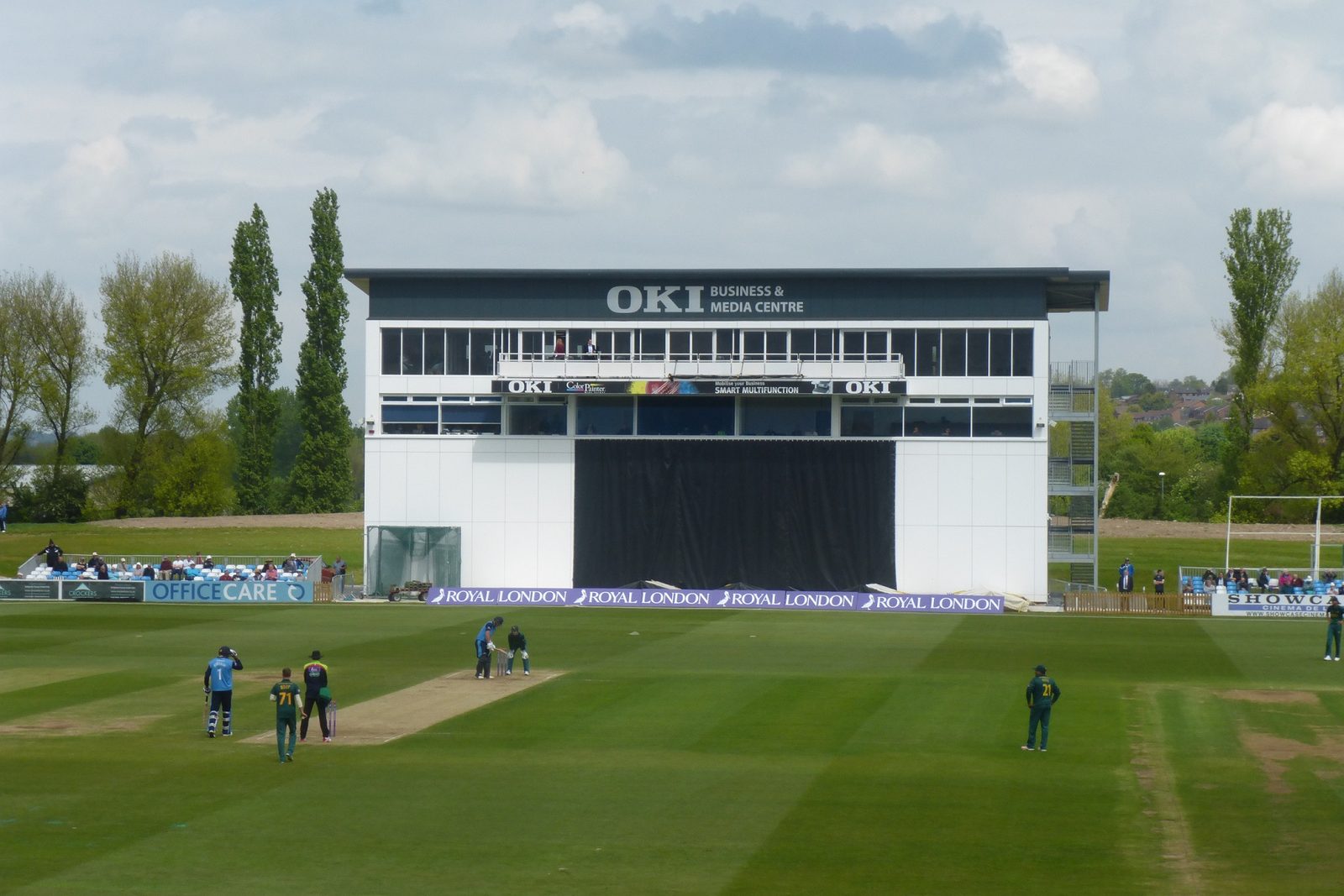
The Business and Media Centre, May 2017


Cricket inside the racecourse
Horse racing began here in 1848, before the county cricket club existed. South Derbyshire Cricket Club moved onto land inside the course in 1863, using the racing Grandstand for spectators and players. The earliest cricket field was therefore part of a larger sporting site, with the demands of racing shaping where a match could be played. The club’s heritage account places the first game on the new ground in June 1863. [1]
The Grandstand Terrace is the name to keep in mind while looking around today. It connects the contemporary cricket ground with a structure built for another sport. The original Grandstand was replaced in 1910–11; the later Grandstand Hotel was demolished in 2000. The Gateway subsequently occupied the site associated with those earlier grandstands. Names outlast buildings, and at Derby that survival can explain a feature of the ground that would otherwise seem puzzling. [1]
The formation of Derbyshire
Derbyshire County Cricket Club was formed in November 1870. The club’s account of the meeting places Walter Boden at the centre of the proposal for an organisation representing the whole county. South Derbyshire’s existing players, officials and ground provided a foundation, but the new institution had a wider purpose. A county club needed to attract support beyond the city and arrange matches appropriate to that larger identity. [3]
That county-wide ambition is useful context for anyone also visiting Chesterfield. Derby became the headquarters, while cricket elsewhere remained part of how the club represented Derbyshire. Looking only at the main ground can make county cricket resemble a football club with one permanent home; the early organisation and subsequent festival grounds tell a broader story. The city ground and the outgrounds belong together in the county’s sporting history, with different settings serving the same team and its supporters.
A playing field that kept moving
Derby’s playing area has changed more than its modern outline suggests. The county’s grounds history describes the effect of the expanding racecourse, which pushed cricket onto a neighbouring part of the site, and the later return to the central area. It also records the interruption caused by a tenancy dispute in the mid-1970s, when first-team matches were spread among other Derbyshire venues. A headquarters could remain central to the club’s identity even during a period when its first team played elsewhere. [4]
Modernisation brought further changes: The Gateway and permanent floodlights arrived in 2004, followed by pavilion refurbishment and the new Media Centre in the following decade. These changes help explain why old photographs can be difficult to reconcile with the present view. Begin with a surviving landmark or a named terrace, then establish which era of the playing field the photograph actually shows. [4]
The championship-winning generation
Derbyshire’s 1936 County Championship victory remains a central point in the club’s history. Its heritage account sets that success within a sustained run near the top of the table, rather than portraying it as an isolated surprise. The team finished third and second before winning the title, then third and fifth in the following seasons. Those results suggest the strength of a generation able to compete consistently against the leading counties. [5]
For a visitor interested in the names behind the ground, the championship story gives substance to the county identity represented here. Derby’s history includes famous international visitors, but its own players and the supporters who followed them are equally important. The club’s account stresses the local origins of the championship side. That makes the achievement especially relevant to the idea behind the county’s formation: a team representing a place, winning through a group developed within its own cricketing community. [5]
A title celebrated at home
The Sunday League triumph in 1990 gave the Derby crowd a different kind of occasion. The club’s retrospective emphasises that the county’s earlier major titles had been secured away: the Championship at Wells and the NatWest Trophy at Lord’s. This time supporters could see the competition won on home soil. The setting changed the experience of success, bringing the decisive celebration into the ground where many had followed the side throughout the season. [6]
One-day cricket also changed what a visit meant. A full contest and a result could be fitted into a single afternoon, producing a different rhythm from the multi-day Championship. Derby’s winning Sunday season belongs to that development in the domestic game. It is a useful matchday memory to place beside the longer championship tradition: the same club and field could become the focus of quite different competitions and crowds.
The Media Centre and a changing audience
The Media Centre opened in 2016, adding a conspicuous modern building at the Racecourse End. Derbyshire’s history of reporting and broadcasting reflects on the contrast between the scale of the new facilities and the changing world of county journalism. The building was busy for the following year’s Women’s World Cup, while routine coverage increasingly reached readers through online reports rather than the older network of newspaper correspondents. [7]
From a spectator’s seat, a media building may look like something peripheral to the match. Historically it is part of how the ground connects with people who cannot attend. Commentary, reports and television carry the play beyond the boundary, and facilities have to accommodate that work. The newer building therefore belongs in the same history as stands and pavilions. Each serves a different audience, and each influences how the cricket is experienced.
Harmanpreet Kaur’s World Cup semi-final
Derby’s international history includes a striking modern landmark: India’s Women’s World Cup semi-final against Australia in 2017. Harmanpreet Kaur made an unbeaten 171 and India won by thirty-six runs. The club’s international retrospective identifies the innings as the highlight of a tournament programme that brought world-class women’s cricket to the ground. A county venue became the stage for a performance remembered across the game. [8]
The innings offers a vivid contrast with the patient accumulation associated with a long Championship afternoon. It is also a reason to include women’s internationals when imagining Derby’s most significant matches. The ground’s story runs through several sporting traditions and several forms of cricket; the World Cup added another audience and another memorable image. Looking from the boundary towards the modern media facilities, you can connect the physical redevelopment with the kind of international occasion it helped the venue accommodate.
New facilities and the continuing ground
Recent improvements extend beyond the principal buildings. Derbyshire’s accessibility information records a Changing Places toilet opened in 2023 behind the Main Stand, alongside another accessible toilet. The club also provides a multi-faith room in the Media Centre. These facilities are part of the history of who can comfortably spend a day at cricket, broadening the story beyond capacity figures or the appearance of a new stand. [9]
The surviving names and newer facilities work together when you explore the ground. A reference to the racecourse takes you back to the original sporting landscape; the Grandstand Terrace recalls vanished architecture; the Media Centre points to international coverage; and accessible facilities describe the needs of today’s visitors. Use the current ground plan to locate them, because historic photographs reflect layouts that have changed. Derby rewards a visit made with an eye for the small clues as well as the obvious new buildings.
What to look for on your visit
- Grandstand Terrace. Its name recalls the racing grandstands that preceded today’s buildings. [1]
- The Gateway. A modern facility on the site associated with the old Grandstand. [4]
- Media Centre. Look towards the Racecourse End for the building opened in 2016. [7]
For today’s stands, ticket routes, travel and accessibility, use the Derby visitor guide and accessibility guide.
Sources and further reading
Sources for Derby connect the dates, performances and changes described here to club archives and published historical accounts.
- Confirmed — Derbyshire CCC: history of the County Ground
- Confirmed — Derbyshire CCC: heritage timeline
- Confirmed — Derbyshire CCC: club formation
- Confirmed — Derbyshire CCC: grounds history
- Confirmed — Derbyshire CCC: 1936 Championship
- Confirmed — Derbyshire CCC: 1990 Sunday League triumph
- Confirmed — Derbyshire CCC: reporting and media history
- Confirmed — Derbyshire CCC: international cricket in Derby
- Confirmed — Derbyshire CCC: accessibility facilities
Explore the other grounds
- Lord’s history
- The Oval history
- Edgbaston history
- Old Trafford history
- Headingley history
- Trent Bridge history
- Taunton history
- Hove history
- Canterbury history
- Chelmsford history
- New Road history
- Grace Road history
- Wantage Road history
- Southampton history
- Sophia Gardens history
- Chester-le-Street history
- Bristol history