Grace Road: the history of the cricket ground
Researched 17 October 2026 · Club archives and primary sources
Grace Road combines a nineteenth-century cricket ground with the memories of Leicestershire’s three County Championship titles and an established social landmark in The Meet. The name remains central to its identity, even as sponsorship and facilities change. A visit connects the early county game, Ray Illingworth’s successful side, the later Whitaker years and international women’s cricket.
History at a glance
A timeline of Grace Road
- 1877–78Land is acquired and the new ground opens for cricket. [1]
- 1894Grace Road hosts its first first-class match. [1]
- 1975Leicestershire win their first County Championship. [2]
- 1996 and 1998Two more championships arrive in the Whitaker and Birkenshaw era. [3]
- 2017England’s Sciver and Knight make World Cup centuries here. [6]
- 2026The official ground name becomes Uptonsteel Grace Road. [8]
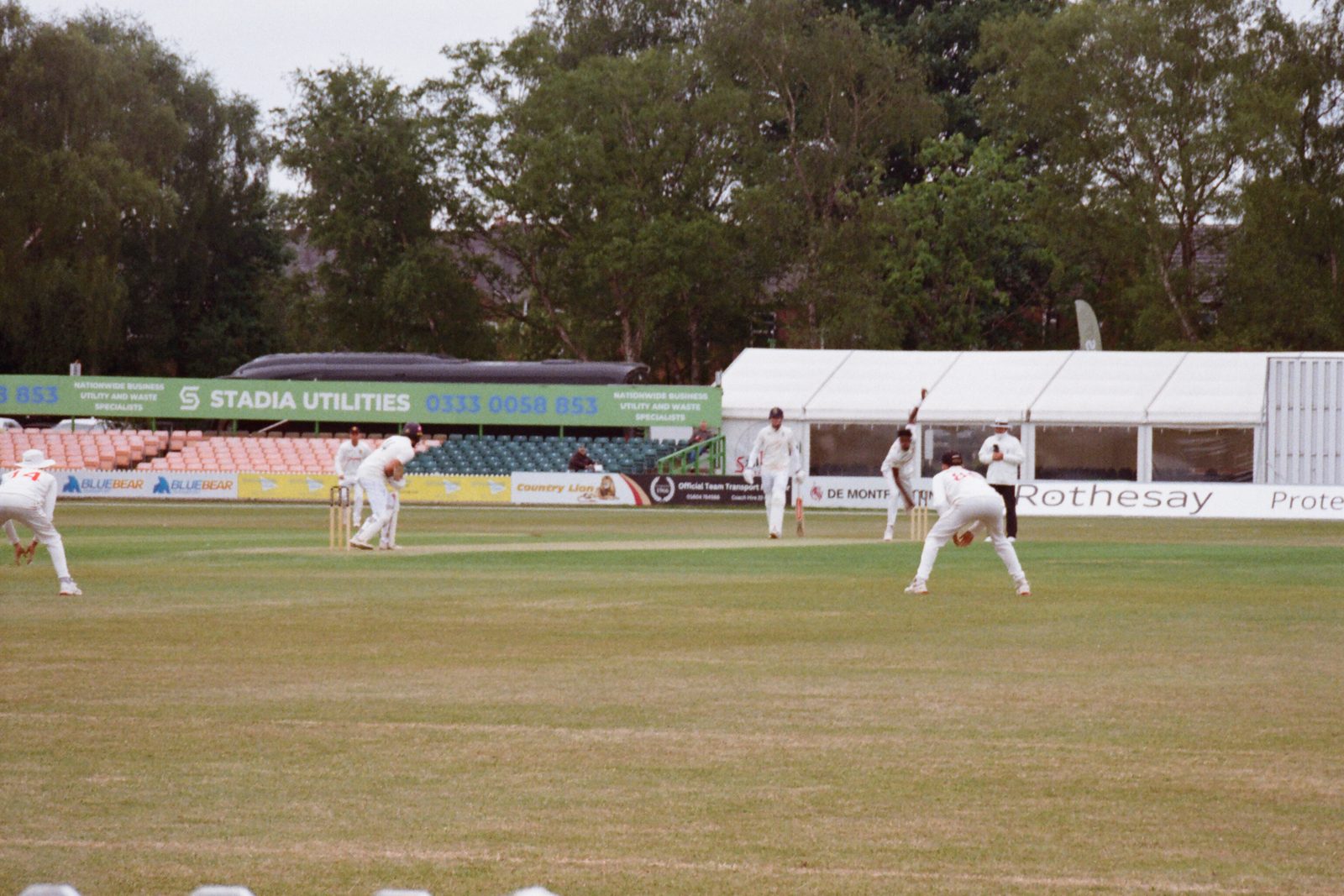
Cricket at Grace Road, May 2025

A ground before the present county club
The club’s historical timeline records the purchase of sixteen acres by the Leicestershire Cricket Ground Company in 1877 and the first cricket at Grace Road in April 1878. The present county club was formed the following March. These separate dates explain how the ground could welcome a Leicestershire side before the organisation familiar today had been established. First-class cricket followed in 1894, and the ground’s first County Championship match was against Nottinghamshire in 1895. [1]
Grace Road’s early story was therefore about creating both a venue and a durable county institution. The distinction is helpful when reading old photographs or anniversary references: the age of a club, the first cricket on a site and entry into a competition are different milestones. The ground gave representative cricket a recognisable place in Leicester, providing a stage on which the county’s identity could develop over succeeding generations.
Illingworth’s championship summer
Ray Illingworth’s team won Leicestershire’s first County Championship in 1975. The club’s detailed retrospective describes a side rich in all-rounders, with Illingworth, Jack Birkenshaw, John Steele and Chris Balderstone providing spin as well as batting strength. The title was secured during the final match at Chesterfield, but Grace Road had supplied much of the season’s drama, including victory over the touring Australians. [2]
Brian Davison made 189 in that Australian match. The club recalls him hitting towards a marquee near The Meet, giving a visitor a concrete landmark against which to imagine the innings. The season also brought the Benson & Hedges Cup. Together those successes show why the summer occupies such a prominent place in Leicestershire’s memory: the county could win a sustained championship campaign, a limited-overs trophy and a prestigious tour match within the same season. [2]
Whitaker, Birkenshaw and two more titles
Leicestershire became champions again in 1996 and 1998. The club’s account of Jack Birkenshaw’s career highlights his coaching role in those successes, while the ICC’s venue history identifies James Whitaker’s leadership of the side. These were the second and third championship titles, creating a distinct later period of success rather than simply extending the Illingworth story. [3] [4]
Birkenshaw connects the generations through different jobs. A player in the earlier successful team became a coach helping another side reach the top. That continuity is a useful way to understand county cricket, where experience passes through dressing rooms and practice sessions as well as formal honours lists. Looking out at Grace Road, the most visible story is the match in progress, but the county’s history also lives in that transfer of knowledge. The names associated with successful seasons often recur in several roles over a much longer period.
The Meet as a social landmark
The Meet remains one of Grace Road’s established event spaces. The club describes a room with separate dining and bar areas and panoramic windows facing the pitch, used for private dinners, meetings, receptions and celebrations. Its role places social life close to the cricket: people gather inside while the field remains the defining view outside. It is a landmark to identify during a boundary walk even when an event or ticket arrangement limits entry. [5]
The name also appears in recollections of famous play, including Davison’s innings against the Australians. That relationship between a familiar building and a remembered shot is one of the pleasures of visiting an older ground. A room used for ordinary occasions can become a marker in a sporting story. For anyone returning after a long absence, identifying The Meet provides a point of continuity amid changing sponsor boards and seating names.
Floodlights and the modern matchday
The ICC’s account prepared for the 2017 Women’s World Cup describes a programme of work that included floodlights, replacement of the Milligan Road wall, changes to the outfield and improved broadcasting infrastructure. It also identifies work involving the Meet and new radio and television positions. These were changes to how Grace Road could stage and communicate cricket, extending well beyond the appearance of the seats. [4]
Floodlights make the equipment of evening cricket part of the ground’s skyline. Broadcast positions connect a compact county venue with audiences watching or listening elsewhere. Seen together, they explain how modern infrastructure fits around an older cricket setting. While walking around, compare the principal buildings with the practical structures needed to show a match. The development of a ground includes those less picturesque additions as well as its better-known pavilions and stands.
A World Cup afternoon of centuries
On 27 June 2017, Natalie Sciver and Heather Knight both made centuries at Grace Road against Pakistan in the Women’s World Cup. Sciver scored 137 and Knight 106 as England reached 377 for seven. The ICC’s match report records a 107-run victory under the Duckworth–Lewis–Stern method and a partnership of 213 between the two batters. It was a major international performance in a setting many supporters knew primarily through county cricket. [6]
The numbers help recreate the scale of that afternoon without needing a stadium-sized ground. England recovered from two early wickets before the partnership transformed the innings. For a visitor, the match adds another layer to the field in front of them: international women’s cricket is part of Grace Road’s history alongside the men’s county championships. The same boundaries and familiar buildings framed a contest followed by a worldwide tournament audience.
Supporters maintaining the stands
Ground history also happens through smaller projects. In April 2025 Leicestershire announced that the Uptonsteel Stand’s seats had been serviced and repainted, with funding from Friends of Grace Road, the club’s official charity. The announcement named Stadium Support Services as the contractor and described further work planned for the Stadia Utilities Stand. This is a different scale of improvement from installing floodlights, but it directly affects the place where supporters spend their day. [7]
Looking at the stands with that in mind gives a fuller picture of how a county venue survives. Maintenance needs money, organisation and repeated attention; an old ground does not stay usable simply by retaining its character. Supporter contributions belong beside championship memories in its story. The seating you use may reflect recent charitable support even when the surrounding ground feels familiar from much older photographs.
Why Grace Road returned to the official name
The club announced that its ground would be called the Uptonsteel Grace Road from the start of the 2026 domestic season. Uptonsteel had acquired stadium naming rights in January 2021, and the later change put the traditional place-name back into the sponsored title. The announcement explicitly connected that decision with the ground’s heritage and the continuing relationship with its commercial partner. [8]
For visitors, this explains why older tickets, photographs and reports may use Uptonsteel County Ground while conversations still centre on Grace Road. These refer to the same venue. Keeping the traditional name visible also helps the historical narrative remain legible: the championship years, The Meet and the international matches are attached to a place supporters recognise. Use the current ground guide for entrances and stand names, then look for the landmarks that connect today’s match with the different eras described here.
What to look for on your visit
- The Meet. An established dining and events space looking across the pitch. [5]
- Uptonsteel Stand. Its 2025 seat refresh was funded by Friends of Grace Road. [7]
- Ground signage. The Grace Road name was restored within the sponsored title for 2026. [8]
For today’s stands, ticket routes, travel and accessibility, use the Grace Road visitor guide and accessibility guide.
Sources and further reading
Sources for Grace Road connect the dates, performances and changes described here to club archives and published historical accounts.
- Confirmed — Leicestershire CCC: historical timeline
- Confirmed — Leicestershire CCC: the 1975 season
- Confirmed — Leicestershire CCC: Jack Birkenshaw’s playing and coaching career
- Confirmed — ICC: Leicester venue history and redevelopment
- Confirmed — Leicestershire CCC: The Meet
- Confirmed — ICC: England v Pakistan, 27 June 2017
- Confirmed — Leicestershire CCC: Uptonsteel Stand seat refresh
- Confirmed — Leicestershire CCC: ground name from 2026