Sophia Gardens: the history of the cricket ground
Researched 17 October 2026 · Club archives and primary sources
Glamorgan began playing at Sophia Gardens in 1967 after leaving Cardiff Arms Park. The parkland ground became an international stadium, staging the dramatic drawn Ashes Test in 2009 while keeping a strong connection with Welsh county cricket. [2] [6]
History at a glance
A timeline of Sophia Gardens
- 1967Glamorgan move from Cardiff Arms Park. [2]
- 1969Victory over Worcestershire secures the Championship. [3]
- 1993Viv Richards and Adrian Dale share a partnership of 425. [3]
- 1999Australia and New Zealand play the first ODI here. [4]
- 2006The ECB awards Cardiff an Ashes Test. [5]
- 2009Anderson and Panesar hold out for a draw. [6]
- 2015England beat Australia in the returning Ashes Test. [7]
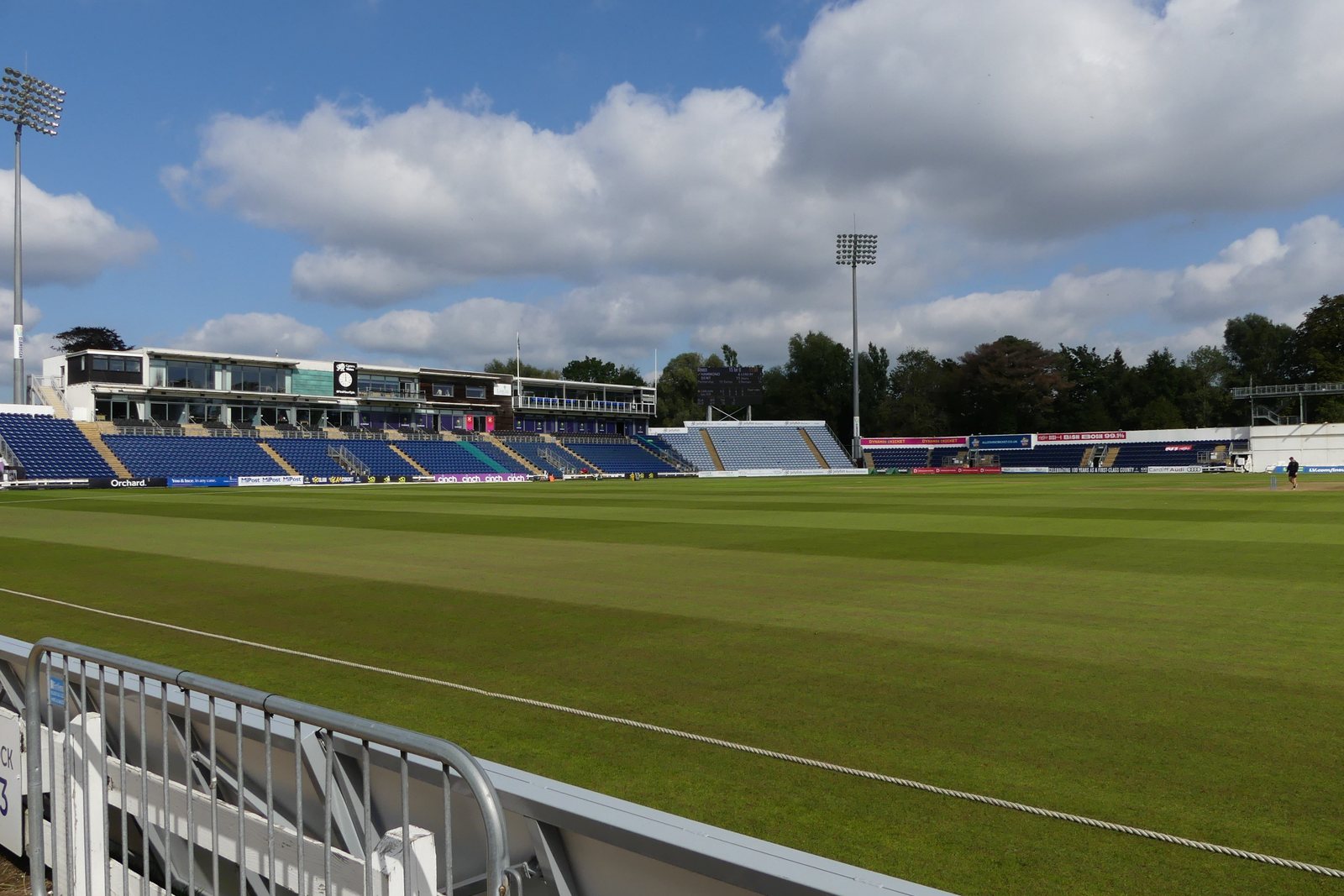

A cricket ground within a public park
Sophia Gardens takes its name from Sophia Rawdon-Hastings, the second wife of the second Marquess of Bute. The Royal Commission’s account dates the establishment of the gardens to 1858, as recreational space for a rapidly growing Cardiff. Cricket was one of several sports played in the wider park, alongside rugby, football and other games. The name therefore reaches further back than Glamorgan’s occupation and explains why a substantial cricket stadium stands within a green area close to the city centre. [1]
The park setting remains part of the experience of arriving for cricket. Glamorgan’s history walk connects the stadium with that surrounding landscape, combining information about the game and the county with the story of the gardens. The approach gives visitors a way to place the stadium within Cardiff before concentrating on the cricket itself. [8]
From Cardiff Arms Park to Sophia Gardens
Glamorgan transferred from Cardiff Arms Park in 1967, marking the start of county cricket at the new base. A match against the touring Indian team introduced the venue. The move brought elements of the old ground with it: the Royal Commission records that stands and enclosures were transported across to the new site. In that sense the earliest Sophia Gardens combined a new setting with familiar accommodation, providing continuity for spectators following the county from the Arms Park. [2] [1]
The surrounding area already had a sporting and entertainment history. Glamorgan’s archive describes the large former RAF hangar converted into the Sophia Gardens Pavilion, which opened in 1951 and staged concerts, exhibitions and sporting events. That building was separate from the cricket pavilion; its roof partly collapsed during the winter of 1982 and it was demolished. Keeping the two pavilions distinct helps when reading old descriptions of the park or matching photographs to the present ground. [2]
A Championship and a remarkable partnership
The new ground soon acquired a major place in Glamorgan’s history. On 5 September 1969, the county beat Worcestershire by 147 runs to secure its second County Championship. Majid Khan’s 156 was central to the victory, on a surface described by the club’s archive as having variable bounce. A ground that had only recently replaced the Arms Park now hosted a title-winning occasion, giving it an immediate emotional importance to Welsh supporters. [9] [3]
Another exceptional county performance came in 1993, when Viv Richards and Adrian Dale added an unbeaten 425 for the fourth wicket against Middlesex. The club’s archive identifies it as Glamorgan’s highest partnership. It offers a different image of Sophia Gardens from the famous last-wicket resistance of the later Ashes Test: a long stand built by established batters rather than survival by the tail. Both kinds of cricket belong to the same field and help explain its appeal beyond international fixtures. [10] [3]
A secure base and room to develop
Glamorgan secured the head lease during the winter of 1995–96. That was a decisive administrative step because it enabled the club to pursue a wider development programme at its headquarters. Work beginning in the winter of 1998–99 included an administration building, sponsors’ boxes, dining facilities and an indoor school. The improvements extended what the site could offer players and spectators, moving it beyond the relatively simple parkland ground of the earlier county years. [3]
The next transformation was tied directly to the ambition to stage Test cricket. In March 2006 the ECB’s Major Match Group visited to hear the case for Category A status. The club, Cardiff Council and Welsh political representatives were involved in the proposals. These decisions show how the future stadium depended on civic and cricketing support together. International status required far more than a good pitch; the surrounding buildings and services had to suit a much larger occasion. [5]
The stadium takes shape
The ECB announced on 20 April 2006 that Cardiff would host an Ashes Test in 2009. Planning approval for the redevelopment followed, and demolition began during the summer. Glamorgan used the old cricket pavilion for the last time in September, against Gloucestershire. By January 2007 work was under way on a new pavilion complex, a grandstand on the old pavilion site and the media complex at the Cathedral Road End. [5]
The Royal Commission dates completion of the main redevelopment to 2008 and records the resulting name, the SWALEC Stadium. Later reports also use the SSE SWALEC. Sophia Gardens remains the geographical name connecting the modern venue with the park and its county-cricket past. When comparing photographs, look for the replacement pavilion and the much larger stands: they explain why the international ground differs so strongly from the earlier open enclosures. [1] [8] [5]
World Cups, Wales and the gates
The first one-day international at Sophia Gardens came in the 1999 World Cup, when Australia met New Zealand. The ground also accommodated a hospitality village during that year’s Rugby World Cup. Glamorgan’s archive recounts the damage to grass beneath the marquees and the subsequent re-seeding of the square. It is a less glamorous part of venue history, but a revealing example of the demands made on a playing field used for events beyond its regular cricket programme. [4]
In 2002 a Wales team defeated England by eight wickets in a friendly one-day match here. The Welsh side combined Glamorgan players with guests, including Jacques Kallis. Around this period the ground gained entrance gates commemorating the captains of Glamorgan’s Championship-winning sides. The Wooller Gates were formally opened in 2001. These named entrances reward a closer look: they connect the act of arriving at a modern stadium with earlier achievements by the county. [4]
The last pair who saved the first Test
The opening Ashes Test began on 8 July 2009. By the final afternoon Australia appeared close to victory, but England’s last pair, James Anderson and Monty Panesar, survived to secure a draw. For the crowd, the focus narrowed from a whole new stadium hosting its first Test to every delivery faced by two lower-order batters. Their resistance gave the ground a defining moment on its debut at the highest level. [6]
England subsequently won the series, increasing the importance attached to that escape in Cardiff. The lasting image is of the final pair leaving the field to the applause of a crowd that had watched a match turn on defensive technique and nerve. When looking at the pitch from a modern stand, remember that this famous finish involved holding position and avoiding dismissal, rather than a winning boundary or spectacular chase. It gave Sophia Gardens its own recognisable chapter in Ashes history. [6]
Later Tests and the history around the boundary
England returned for a Test against Sri Lanka in 2011 and won by an innings and 14 runs. The Ashes returned in 2015, when England defeated Australia by 169 runs. Glamorgan’s archive also records Champions Trophy fixtures in 2013 and 2017, including the later tournament’s semi-final between England and Pakistan. The rebuilt ground therefore supported a sequence of international occasions after the first Ashes match, alongside Glamorgan’s county programme. [7]
For a visit today, the Museum of Welsh Cricket and the named entrances offer ways to connect those major matches with the wider Welsh game. Glamorgan introduced a QR-code history walk around the stadium in 2018, combining information on the ground, cricket and the surrounding park. Ask about current access before planning a separate museum or heritage visit. On a match day, simply noticing the gates, pavilion and parkland approach helps put the action on the field into context. [8] [1]
What to look for on your visit
- Named entrance gates. The gates recall Glamorgan’s Championship captains. [4]
- The rebuilt pavilion. A central part of the preparation for Test cricket. [5]
- Museum of Welsh Cricket. Explore the broader Welsh story at the ground. [1]
For today’s stands, ticket routes, travel and accessibility, use the Sophia Gardens visitor guide and accessibility guide.
Sources and further reading
Sources for Sophia Gardens connect the dates, performances and changes described here to club archives and published historical accounts.
- Royal Commission: Sophia Gardens historic site
- Glamorgan Cricket Archives: the move to Sophia Gardens
- Glamorgan Cricket Archives: matches and the ground lease
- Glamorgan Cricket Archives: one-day internationals
- Glamorgan Cricket Archives: stadium redevelopment
- Glamorgan Cricket Archives: the Ashes come to Wales
- Glamorgan Cricket Archives: Stadium Sophia
- Glamorgan: the ground history walk
- Glamorgan Cricket Archives: Majid Khan’s title-winning innings
- Glamorgan Cricket Archives: Adrian Dale